
Hotel Interior Design Company in Bangalore
Hotel interior design company in Bangalore for boutique, business, and luxury hotels — including lobbies, guest rooms, restaurants, bars, banquet halls, and back-of-house spaces. Our recent Koramangala project covered 28 rooms, lobby, restaurant, and rooftop bar in 14 weeks while the hotel remained operational.
Published: April 14, 2026 · Last verified: 2026-06-14
Hotel Interior Design Cost & Timeline in Bangalore
Hotel interior design in Bangalore costs Rs. 3,000 to Rs. 7,000 per sq.ft., or roughly Rs. 15-50 lakh per key depending on the hotel category and finish level. Boutique hotel renovations on MG Road and Cubbon Park typically take 12-20 weeks; new build-outs for business hotels in Whitefield and Electronic City run 20-36 weeks including furniture procurement.

Hospitality Spaces Built for Guest Experience
Professional hotel interior design in Bangalore demands meticulous attention to acoustics, lighting, material durability, and brand compliance. Nextura Interiors delivers complete hotel fit-outs covering lobby design, guest room construction, corridor finishes, F&B outlets, banquet halls, and back-of-house areas. We work with hotel operators including independent boutique properties and branded business hotels to meet PIP (Property Improvement Plan) requirements, FHRAI classification standards, and local BBMP occupancy regulations. Our team handles phased renovations that allow hotels to remain partially operational during construction, minimizing revenue impact. From five-star lobbies near Cubbon Park to budget hotel room standardization in Marathahalli, we deliver on time and on brand. Bangalore's hospitality sector faces particular challenges including high occupancy rates that limit renovation windows to narrow off-peak periods, stringent Karnataka Excise licensing requirements for F&B outlets, and the need to maintain noise isolation between guest floors during phased construction in operating properties. Looking for ground-up construction instead? See our hotel construction services in Bangalore.
How to Evaluate a Hotel Interior Design Firm in Bangalore
Hotels are not offices. The number of firms in Bangalore that have actually built and handed over a hotel — with all the FHRAI compliance, AAI height restrictions, fire NOC, FSSAI for kitchens, KSPCB consent for STP and DG sets, lift licence and pollution-board paperwork — is a fraction of the firms that say they do hospitality. Before signing with any hotel interior design company in Bangalore, work through this evaluation framework.
Capability checks that actually matter
- At least 2 referenceable opened hotels (3-star or above) in South India — visit one that is at least two years old and inspect finishes for wear.
- Demonstrated FHRAI awareness in their scope documents — room sizes, BOH ratios, fire egress, accessibility room minimums.
- An in-house F&B / kitchen consultant or a longstanding consultant relationship. A generic interior firm doing the kitchen layout is a red flag.
- FOH (front-of-house) and BOH (back-of-house) drawings in their portfolio — not just lobby moodboards.
- Working knowledge of brand PIP (Property Improvement Plan) cycles for chains operating in Bangalore — Marriott, IHG, Hyatt, Accor, Hilton, Lemon Tree, Radisson.
- Single-team accountability across design, MEP, civil and statutory paperwork — hotel projects fail at the seams between vendors more than at any single trade.
Questions to ask in the first meeting
- Walk me through the worst project you delivered and what you learnt — an honest answer is a green flag.
- Who is your kitchen consultant by name? If the answer is "we figure it out as we go," that's a no.
- If we are under a brand PIP, can you walk us through your PIP execution plan?
- What is your design-freeze gate, BOQ approval gate and change-order rate?
- Is OS&E (linens, china, glassware) inside or outside scope?
- What is your defect liability period? 12 months minimum on civil and MEP, with a separate FF&E warranty schedule by line item.
Pricing in Bangalore for capable hotel firms ranges roughly Rs 5–18 lakh per key for the boutique-to-mid-luxury band, with international firms working on branded 5-star flagships running Rs 25–45 lakh per key. Anything materially below Rs 5 lakh per key for a 3-star or above usually means the bidder hasn't priced statutory, FHRAI compliance or PIP-grade FF&E.
End-to-End Hotel Interior Services
As a full-service hotel fit-out company, we offer end-to-end hospitality construction services from concept design through FF&E installation and final snagging.

What We Deliver
Lobby & Reception
Front desk millwork, feature walls, ceiling treatments, and arrival experience design.
Guest Room Fit-Outs
Bathroom pods, wardrobes, headboard units, and minibar stations.
Restaurant & Bar Interiors
Commercial kitchen construction, exhaust systems, and front-of-house dining design.
Banquet & Conference
Modular partition systems, AV integration, and flexible event space buildouts.
Back-of-House Areas
Laundry rooms, staff canteens, and housekeeping stations.
FF&E Procurement
Furniture, fixtures and equipment sourcing, mock-up rooms, and brand-compliant specifications.
Hotel Interior Design Budget Guide — Bangalore
| Hotel Category | Scope Included | Cost/Sq.Ft. | Per-Key Budget | Timeline | Best Suited For |
|---|---|---|---|---|---|
| Budget / 3-Star | Rooms, lobby, corridors, basic F&B | Rs. 3,000–4,500 | Rs. 8–15 Lakh | 12–16 weeks | New economy hotels, branded budget chains |
| Business / 4-Star | Rooms, lobby, restaurant, bar, conference, gym | Rs. 4,500–6,000 | Rs. 15–25 Lakh | 16–24 weeks | Corporate travel hotels, Whitefield/ORR corridor |
| Luxury / 5-Star | Full property: rooms, suites, lobby, multiple F&B, spa, banquet | Rs. 6,000–8,000+ | Rs. 25–50 Lakh | 20–36 weeks | Luxury properties, MG Road/Cubbon Park area |
| Boutique Renovation | Phased room refresh, lobby upgrade, F&B refresh | Rs. 3,500–5,500 | Rs. 10–20 Lakh | 12–20 weeks | Operating hotels needing refresh, Koramangala/Indiranagar |
Costs indicative for Bangalore as of 2026. Actual pricing varies by scope and specifications.
Hidden Costs in Hotel Projects (the Ones That Surprise Owners)
The per-sq.ft. and per-key budgets above cover design, civil, finishes and FF&E. They do not cover the statutory, licensing and pre-opening costs that often add 8–15% on top. Plan these into the cash-flow model from day one.
- ✓Star-rating committee inspection & classification fees — varies by star band, plus periodic re-classification.
- ✓FSSAI licence for the kitchen and any F&B outlet — central or state depending on turnover.
- ✓Fire NOC + AAI height NOC from Karnataka Fire Services and AAI for buildings near airport approach zones.
- ✓STP (sewage treatment plant) and KSPCB consent — mandatory above a certain room count or G+ floor count.
- ✓Bar / liquor licence (CL-2 / CL-4) — capital cost varies, plus annual renewal.
- ✓Lift licence — Karnataka Lifts and Escalators Act registration.
- ✓Façade and signage approvals — BBMP advertising tax for projecting signs.
- ✓Brand PIP enforcement — if under a chain, the brand may mandate specific FF&E spec above your budget cost.
- ✓OS&E (operating supplies and equipment) — linens, china, glassware, silverware. Rs 80K–3 lakh per key separately from FF&E.
- ✓Pre-opening expenses — staff training, soft launch, marketing. Often 4–6% of capex.
Owner's Pre-Booking Checklist
Run this list before you sign with any hotel interior design firm. Each item maps to a place where projects routinely go wrong.
- ✓Visit one operating hotel the firm has built. Check guest room finishes for wear after 2+ years.
- ✓Ask the firm's PM about the worst project they delivered and what they learnt. Honesty is a green flag.
- ✓Confirm in writing: design freeze date, BOQ approval gate, and change-order rate.
- ✓Get the FHRAI-compliance scope written — who is responsible for room size compliance, BOH ratio, fire egress?
- ✓If you are under a brand, share the PIP document with shortlisted firms; ask them to walk through their execution plan.
- ✓Ask for the kitchen consultant by name. If it's "we figure it out as we go," that's a no.
- ✓Confirm OS&E scope — in or out of contract.
- ✓12-month defect liability minimum, with a separate FF&E warranty schedule by item.
Planning a Hotel Project?
Get a free site assessment and preliminary budget estimate.
Get a Free Quote → WhatsApp UsWhy Bangalore Hotel Owners Choose Nextura for Interior Design & Fit-Outs
Bangalore's hospitality market demands hotel interior designers in Bangalore who understand not just aesthetics but the operational realities of running a hotel. Nextura Interiors brings hospitality interior design experience across Bangalore since 2013 to every project, combining guest psychology insights with deep knowledge of FHRAI classification standards and Karnataka's regulatory environment. Our team includes designers who have worked on hotel interior projects from concept through FF&E installation, independent boutique property launches, and large-scale renovation programmes for operating hotels where minimising guest disruption is paramount.
What sets us apart as a hospitality interior design company in Bangalore is our ability to work across the city's distinct hotel corridors. The MG Road luxury strip demands opulent lobbies and internationally benchmarked guest rooms for business travellers and high-net-worth tourists. The Whitefield business hotel cluster requires efficient, tech-forward room designs catering to extended-stay IT professionals. The Koramangala boutique hotel scene calls for characterful, Instagram-worthy interiors that attract younger domestic travellers. As experienced hotel interior decorators, we tailor every design concept to the specific micro-market, guest profile, and revenue strategy of the property. As a hotel renovation company in Bangalore, our phased execution methodology allows us to renovate occupied hotels floor-by-floor, structured to minimize occupancy loss during phased renovation — our Koramangala project maintained 70% occupancy throughout construction -- a critical advantage for hotel owners who can't afford full shutdowns.
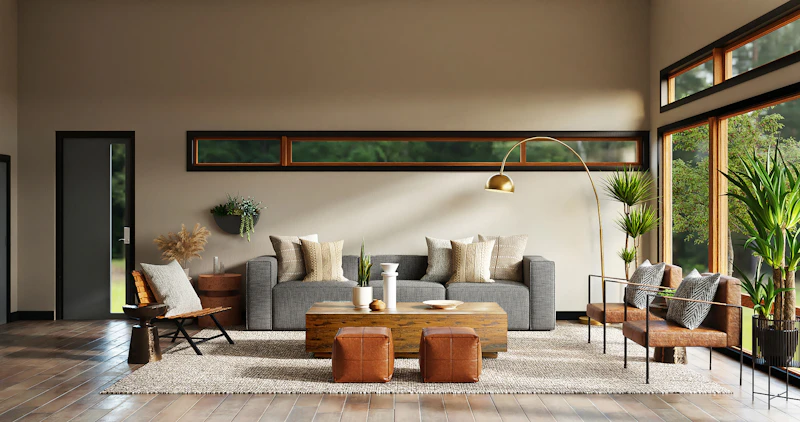
Hotel Renovation vs New-Build — Cost and Timeline
Bangalore has a stock of 1990s–2000s era hotels going through PIP cycles. Renovation has different economics than new-build, and most first-time owners under-estimate what a phased refurb on an operating hotel actually costs.
Renovation per key (refurb existing 3-star to 4-star)
Rs 6–14 lakh per key including FF&E. The big variables are how much MEP needs replacing (often 70% or more) and whether bathrooms are stripped to the slab.
Phased renovation while operating
Adds 30–50% to per-key cost vs vacant renovation. Adds 8–14 weeks to timeline. But the lost revenue from closing the hotel completely usually exceeds the renovation premium — which is why our Koramangala project below was phased rather than shut down.
Common renovation surprises
- Plumbing risers fail and need full replacement — adds Rs 1.5–3 lakh per key.
- Electrical wiring is substandard for modern AC + IPTV + USB outlet loads — full rewire common.
- Bathroom waterproofing fails on first water-test — full strip and re-do.
- Existing HVAC capacity insufficient — full plant replacement.
- Fire compliance gaps from earlier era — sprinkler retrofit, smoke-stop lobbies, exit signage.
Boutique Hotel Renovation — Koramangala, Bangalore
This boutique hotel interior design project involved a complete property refresh while the hotel remained operational throughout.
| Property Type | 28-key boutique hotel |
| Location | Koramangala, Bangalore |
| Scope | Lobby, 28 rooms, restaurant, rooftop bar |
| Area | 18,000 sq.ft. across 4 floors |
| Timeline | 14 weeks (phased renovation) |
| Budget | Rs. 4,200/sq.ft. average |
| Completion | November 2025 |
- Complete lobby redesign with Italian marble flooring and brass reception counter
- 28 guest rooms renovated in 3 phases — 70% occupancy maintained throughout
- New rooftop bar with Karnataka Excise CL-2 license coordination
- Restaurant kitchen upgraded to FSSAI compliance with new exhaust system
- Full MEP upgrade including VRF HVAC and new electrical distribution
- Fire safety system upgraded to current NBC Part IV standards
"They renovated our lobby and 28 rooms while we were still operating. We maintained 70% occupancy throughout the 14-week programme. Not a single guest complaint about construction noise or disruption. The rooftop bar has become our highest-revenue outlet since reopening."
— General Manager, Boutique Hotel, Koramangala
Hotel Lobby and Reception Interior Design in Bangalore
A hotel lobby must create a lasting first impression within seven seconds of a guest walking through the entrance. As specialist hotel reception interior designers in Bangalore, we design lobbies that balance visual impact with functional efficiency. Check-in counter ergonomics are critical: we specify 900mm counter height for standing reception and 750mm for seated check-in positions, ensuring comfortable interaction for both guests and staff. Counter depth is maintained at 600mm minimum with concealed cable management for PMS terminals and card machines.
Lobby lighting follows a carefully layered scheme. Ambient lighting sits at warm 2700K-3000K colour temperature with a minimum of 200 lux at the reception counter and 150 lux in seating areas. Accent lighting highlights feature walls, art installations, and signage. We specify large-format porcelain tiles (1200x600mm minimum) or Italian marble for high-traffic lobby floors, selected for both visual appeal and durability under luggage trolley wheels. Circulation space planning accounts for trolley turning radii, wheelchair accessibility (IS 11186 compliance), and peak check-in crowd flow. All lobby furniture is specified to contract-grade standards with CF (combustion-modified foam) rating for fire safety, ensuring compliance with National Building Code requirements while maintaining the luxury feel that Bangalore's competitive hospitality market demands.
Guest Room Interior Design for Bangalore Hotels
Guest room design for Bangalore hotels requires maximising usable space within the city's typical room footprints: 280-350 sq.ft. for standard rooms and 450-600 sq.ft. for suites. We position beds to optimise window views -- a significant factor for upper-floor rooms overlooking Bangalore's tree canopy -- while maintaining minimum 900mm clearance on both sides for housekeeping access. Bathroom layouts follow a wet-area versus dry-area separation philosophy, with the shower and WC in a fully waterproofed wet zone and the vanity in a transitional dry zone.
Minibar positioning is specified within the room's entry vestibule or near the work desk to avoid disturbing sleeping guests. Every work desk includes integrated data ports, USB-A and USB-C charging outlets, and a minimum 800mm x 500mm work surface -- essential for Bangalore's IT professional guest demographic, many of whom work night shifts and need blackout curtain systems rated at 99.9% light blockage. Wardrobes incorporate electronic safes (minimum 200mm internal height for laptops) and full-width hanging rails. Bathroom finishes use anti-skid tiles with a coefficient of friction exceeding 0.5 as per IS 13715, rain shower installations with minimum 200mm head diameter, and towel warmer units sized to the room's electrical load capacity. Each room design undergoes a mock-up phase where a complete prototype room is built, tested by the operations team, and approved before mass rollout begins.
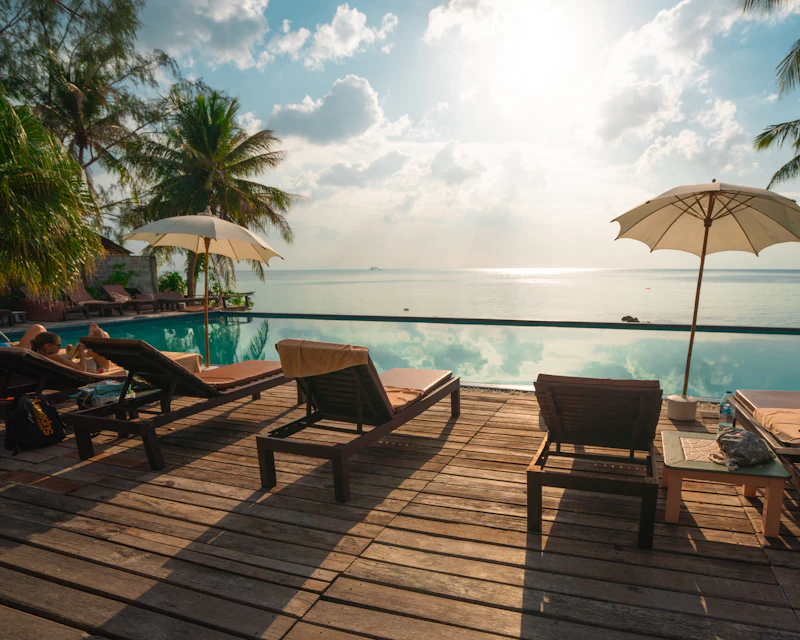
Hotel Restaurant and Bar Interior Design
Food and beverage areas are among the most complex hotel interior design challenges, requiring seamless integration of front-of-house aesthetics with back-of-house functionality. Our restaurant interior design team creates all-day dining layouts with flexible seating configurations that transition from breakfast buffet service to la carte dinner settings. Specialty restaurant design focuses on creating distinct atmospheres through material palettes, lighting control (dimmable circuits for each zone), and acoustic separation from adjacent hotel spaces.
Bar counter height is specified at 1050mm with a 450mm overhang for comfortable seating, while back-bar shelving follows a three-tier display system for spirits. Wine cellar requirements include temperature-controlled storage (12-14 degrees Celsius, 60-70% humidity) with vibration isolation. Outdoor terrace dining takes advantage of Bangalore's year-round pleasant climate, with retractable awning systems for monsoon months. Commercial kitchen adjacency follows FSSAI requirements, with pass-through windows, distinct entry and exit routes for service staff, and grease trap sizing per discharge volume. For hotels requiring a CL-2 liquor license from Karnataka Excise, we ensure the bar layout meets the separate entry requirement and minimum area specifications mandated by the licensing authority.
Hotel Spa and Wellness Area Design
Spa and wellness areas have become essential revenue centres for Bangalore hotels competing in the luxury and upper-midscale segments. Treatment room dimensions start at a minimum 12 sq.m. per room, with couples' suites at 18-20 sq.m. including space for a soaking tub. Relaxation lounges provide 2.5 sq.m. per guest with reclining seating and indirect lighting. Changing room specifications include individual lockers (minimum 350mm width), separate wet and dry grooming stations, and accessible shower cubicles.
Steam rooms require waterproof wall and ceiling systems rated for continuous 45-degree Celsius exposure with 100% humidity, while saunas need heat-resistant timber cladding (typically Canadian hemlock or Finnish spruce) with electrical heater specifications per IS 302. Ventilation for aromatherapy treatment rooms demands dedicated air handling with 10-15 air changes per hour to prevent scent carryover between sessions. Waterproofing for wet areas follows a tanked membrane system with minimum 200mm upstand heights and floor drainage at 1:60 falls. Lighting throughout the spa is dimmable, warm-toned (2200K-2700K), with no exposed light sources visible to guests lying on treatment beds. Sound insulation between treatment rooms targets STC 50+ to ensure privacy and tranquility during treatments.

Hotel Programme — What's Actually in Your Project Scope
"Hotel interior design" is shorthand for three distinct programmes — front-of-house (the public areas guests see), guest rooms (the revenue inventory) and back-of-house (the operational machinery). Owners under-scope the BOH most often. Here's the full picture for a typical 3-star to 4-star property in Bangalore.
Front-of-House (FOH) public areas
- Lobby and reception — the most-photographed area; 4–6% of total budget. Imported stone or premium tile, designer lighting, brand-aligned art.
- All-day dining restaurant — required for 3-star and above. Open kitchen, buffet counter, private dining alcove.
- Specialty restaurant — 4-star and above. Strong brand identity, specialised kitchen.
- Bar / lounge — bar back, beverage refrigeration, glasswasher, custom seating.
- Banquet / meeting — pre-function area, breakable banquet hall, business centre with print/scan.
- Spa and gym — 4-star and above. Treatment rooms with plumbing, gym with equipment foundations, changing rooms, sauna.
- Pool — pool plant room, pool deck design, lifeguard station.
- Public toilets, lift lobbies, corridors and signage.
Guest rooms
- Standard rooms — 70–75% of inventory. Bed, work desk, wardrobe, minibar, soft seating, bathroom.
- Suites — 5–15% of inventory. Living room separate from bedroom.
- Specialty rooms — differently-abled-friendly, family rooms, club lounge access rooms.
- Bathrooms — the highest-spec area in the room. Stone or vitrified tile, premium fittings, lighting, demist mirror, exhaust fan.
Back-of-House (BOH)
- Main kitchen — equipment, cooking lines, walk-in cold storage, stewarding, grease trap, exhaust.
- Specialty kitchen — for specialty restaurants, separate hood and zoning.
- Banquet kitchen — separate or satellite from main if banquets are large.
- Stores — dry, cold, frozen, beverage, housekeeping, engineering.
- Laundry — in-house for 4-star and above; outsourced for 3-star.
- Staff areas — staff dining, staff lockers, training room, time office.
- Plant rooms — AHU, chiller, DG, electrical room, fire pump room, STP.
FF&E and OS&E — the Procurement Nobody Warns You About
FF&E (Furniture, Fixtures and Equipment) is everything loose — beds, sofas, chairs, lamps, art, mirrors, mini-fridges. OS&E (Operating Supplies and Equipment) is everything you handle daily — linens, china, glassware, silverware, brand printed collateral. OS&E is often handled by the operator (the management company), not the design firm. Build it into the cash-flow plan separately. The hotel won't open without OS&E.
Typical FF&E budget per key by star rating
- 3-star: Rs 1.5–2.5 lakh per key
- 4-star: Rs 3–5 lakh per key
- 5-star city: Rs 5–9 lakh per key
- 5-star luxury / flagship: Rs 9–18 lakh per key
Typical OS&E budget per key
- 3-star: Rs 80K–1.4 lakh
- 4-star: Rs 1.5–2.5 lakh
- 5-star city: Rs 2.5–4 lakh
- Luxury: Rs 4 lakh and above
Operator Models — How They Affect the Design Process
The operator model dictates how much design freedom you have, who approves what, and how often the brand will mandate refreshes. Pick the operator model before you brief the designer.
Owned and operated (independent)
The owner is the operator. Full control of design, brand and cost. No royalty, no PIP. The trade-off is no brand draw — you're competing on location and reviews alone.
Franchise
Owner runs the hotel under a brand licence (Lemon Tree, Holiday Inn Express, Park Inn). Brand standards apply, royalty 6–9% of revenue, PIP every 6–8 years. Brand draw is real.
Management contract
Brand operates the hotel for the owner. Marriott, Hyatt, IHG, Accor models. Higher fees but professional operations. Design is fully brand-driven.
Lease
Owner leases the building to an operator for a fixed rental. Less owner involvement in design after a point. Independent owners pick their designers; brand-managed hotels often have a brand-approved designer panel.
Hotel Interior Design Standards and Regulations in Bangalore
Designing a hotel in Bangalore means working within a layered regulatory framework that covers everything from room dimensions to fire escape widths. The FHRAI star classification system mandates minimum room sizes: 120 sq.ft. carpet area for a 3-star standard room, 180 sq.ft. for 4-star, and 220 sq.ft. for 5-star properties. These are carpet areas excluding the bathroom -- add another 45-70 sq.ft. for bathrooms depending on the classification. Suite rooms at 5-star properties require a minimum 400 sq.ft. combined living and sleeping area. Ceiling heights must be at least 2.6m for 3-star and 2.75m for 5-star.
FHRAI Minimum Room Size Standards
| Star Rating | Standard Room (carpet area) | Bathroom | Ceiling Height |
|---|---|---|---|
| 3-Star | 120 sq.ft. | +45 sq.ft. | 2.6m min |
| 4-Star | 180 sq.ft. | +55 sq.ft. | 2.7m min |
| 5-Star | 220 sq.ft. | +70 sq.ft. | 2.75m min |
| 5-Star Suite | 400 sq.ft.+ (combined) | +70 sq.ft. | 2.75m min |
If your hotel plans to serve alcohol, you'll need a CL-2 or CL-4 license from the Karnataka Excise Department. CL-2 covers restaurants and bars within hotel premises, while CL-4 is for standalone bars. The license application requires architectural drawings showing the bar area clearly demarcated from dining spaces. Karnataka Excise mandates minimum distance rules from educational institutions (100m in BBMP limits), so confirm your site eligibility before investing in bar-area design. License processing takes 4-8 weeks after submission of all documents including the BBMP trade license.
Karnataka Excise License Requirements for Hotel Bars
| License Type | Applies To | Key Requirements | Processing Time |
|---|---|---|---|
| CL-2 | Restaurant & bar within hotel | Bar area demarcated in drawings, 100m distance from schools | 4-8 weeks |
| CL-4 | Standalone bar in hotel | Separate entry, minimum area specs, BBMP trade license required | 4-8 weeks |
Fire safety is non-negotiable. Under the Karnataka Fire Force Act and National Building Code Part IV, any hotel building exceeding 15m in height must have a fire NOC from the Karnataka State Fire and Emergency Services. This requires pressurised stairwells, 2-hour fire-rated corridor walls (IS 1641 specification), automatic sprinkler systems (IS 15105) with a minimum density of 5 mm/min for ordinary hazard areas, and a wet riser system with landing valves every 30m vertically. Refuge areas must be provided on every fourth floor for buildings above 24m. Your interior materials must comply with IS 11871 for surface spread of flame classification -- Class 1 rated materials only for corridors and lobbies.
Fire Safety Requirements for Bangalore Hotels
| Requirement | Standard | Specification |
|---|---|---|
| Corridor fire rating | IS 1641 | 2-hour fire-rated walls |
| Sprinkler system | IS 15105 | 5 mm/min density for ordinary hazard |
| Surface materials | IS 11871 | Class 1 rated only in corridors/lobbies |
| Wet riser system | NBC Part IV | Landing valves every 30m vertically |
| Refuge areas | NBC Part IV | Every 4th floor for buildings above 24m |
| Fire NOC required | Karnataka Fire Force Act | Buildings exceeding 15m height |
BBMP occupancy certificate requirements add another layer. Hotels need clearances from the fire department, BWSSB (water and sewerage), BESCOM (electrical), Karnataka Pollution Control Board (for DG sets and STP), and the Health Department. The BBMP building plan must show the total built-up area, parking provisions (1 ECS per 100 sq.m. of built-up area), and rainwater harvesting pits. For hotels above 20 rooms, a functioning sewage treatment plant (STP) is mandatory.
BBMP Approvals Required for Hotels in Bangalore
| Department | Clearance | Key Requirement |
|---|---|---|
| Fire Department | Fire NOC | Sprinkler + wet riser + refuge areas |
| BWSSB | Water & sewerage | STP mandatory for 20+ rooms |
| BESCOM | Electrical connection | Load sanction + DG compliance |
| KPCB | Pollution consent | DG set + STP emissions |
| Health Dept | Health clearance | Kitchen and F&B sanitation |
| BBMP | Occupancy certificate | Parking: 1 ECS per 100 sq.m., rainwater harvesting |
On the FF&E (Furniture, Fixtures and Equipment) side, Bangalore hotels typically source mattresses from Springwel or Centuary (INR 15,000-45,000 per king-size mattress depending on star category), bathroom fixtures from Kohler or Grohe (budget INR 80,000-2,00,000 per bathroom for 4-star), and case goods from manufacturers in Peenya and Bommasandra industrial areas. Lobby furniture often comes from Bent Chair, Durian, or custom fabricators on Mysore Road. Plan 12-14 weeks lead time for custom FF&E and 6-8 weeks for standard catalogue items. Budget INR 8-15 lakh per key for 3-star FF&E and INR 20-35 lakh per key for 5-star, excluding civil and MEP works.
Hotel FF&E Budget Guide (Bangalore)
| Item | Brand/Source | Budget Range | Lead Time |
|---|---|---|---|
| Mattresses (king) | Springwel, Centuary | Rs. 15,000 - 45,000 | 2-3 weeks |
| Bathroom fixtures | Kohler, Grohe | Rs. 80,000 - 2,00,000/room | 3-4 weeks |
| Lobby furniture | Bent Chair, Durian, custom | Per design | 6-8 weeks |
| Case goods (joinery) | Peenya/Bommasandra workshops | Per design | 12-14 weeks (custom) |
| Total FF&E (3-star) | — | Rs. 8-15 lakh per key | — |
| Total FF&E (5-star) | — | Rs. 20-35 lakh per key | — |
Regulatory, fire, licensing, and code references above are indicative planning inputs for Bangalore hospitality projects. Final requirements should be validated against the latest applicable codes, authority approvals, and site conditions before execution.
Luxury Hotel Interior Design Trends in Bangalore (2025-2026)
The Bangalore hospitality market is evolving rapidly, and luxury hotel interior design trends for 2025-2026 reflect a blend of global influences and distinctly local character. Biophilic design leads the movement, with living green walls in lobbies, natural stone and timber material palettes, and courtyard integrations that connect guests to Bangalore's garden city heritage. Several new properties are commissioning local Bangalore artisan collaborations, incorporating Channapatna wood craft for decorative elements, Bidriware (silver-inlaid metalwork from nearby Bidar) for statement pieces in lobbies and suites, and handloom textiles from Karnataka's weaving clusters for soft furnishings.
Sustainable materials are now a client requirement rather than a premium add-on: FSC-certified wood for all millwork, recycled brass fixtures, low-VOC paints, and reclaimed teak for feature walls. Technology integration has moved beyond basic automation into seamless guest experience territory, including mobile key entry systems, IoT-enabled room controls (lighting, temperature, curtains via a single app), automated blackout curtains with daylight sensors, and voice-controlled room service ordering. Design teams are also creating Instagram-worthy moments throughout hotel public areas -- statement staircases, rooftop bar aesthetics with Bangalore skyline backdrops, and art-gallery-style corridors. Bangalore's thriving craft brewery culture is influencing hotel bar design, with properties incorporating exposed copper brewing elements, taproom-style seating, and industrial-chic finishes that appeal to the city's young professional demographic. For the structural and MEP systems behind these designs, our engineering team ensures every aesthetic vision is backed by robust technical execution.
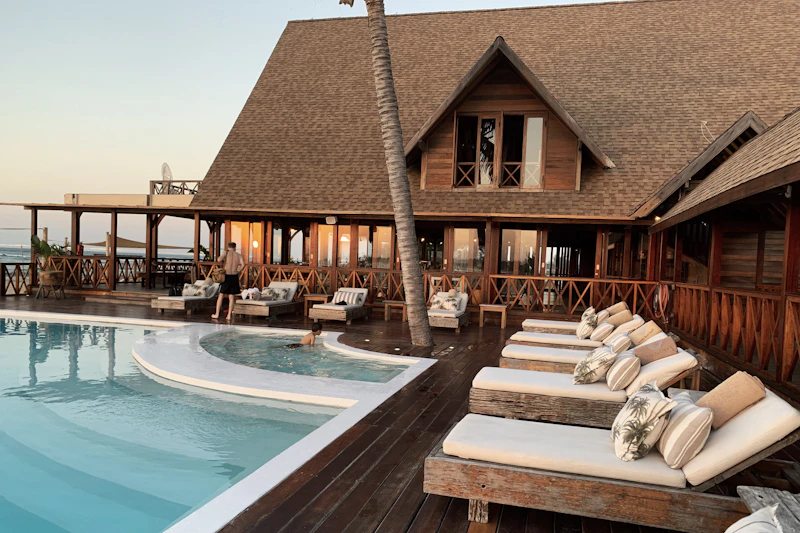
Bangalore-Specific Hotel Design Considerations
Bangalore is not one hotel market — it is at least four, each with its own programme, guest profile and statutory wrinkles. The design brief that wins in Devanahalli loses in Cubbon Park.
Airport corridor (Devanahalli, KIAL)
AAI height NOC is mandatory; building heights are restricted in airport approach zones. Soundproofing for jet noise is a real spec item. Premium location for branded airport hotels (Hilton Bangalore Airport, Aloft, Holiday Inn Express).
Business district (MG Road, Cunningham, Lavelle, Whitefield)
Tight sites, premium rents, neighbour-coordination heavy. City 5-star territory. Higher land cost forces vertical hotels (G+8 to G+12).
Tech parks adjacency (ORR, Whitefield, Electronic City)
Mid-luxury and 4-star programmes for corporate travel. Branded mid-market (Lemon Tree, Holiday Inn) is the dominant typology.
Heritage and boutique zones (Cubbon Park, JP Nagar)
Smaller plots, boutique programmes (12–25 keys), strong design point of view.
Karnataka building bylaws specifics
FAR varies by zone (1.75 to 3.25 typical commercial). Basement parking is mandatory above thresholds. Setbacks vary by road width. STP is mandatory above key counts. Rainwater harvesting is mandatory.
Hotel Lobby + 12 Rooms Refresh — Whitefield, Bangalore
Related Hotel Services in Bangalore
Hotel Interior Design FAQs
How much does hotel interior design cost per sq.ft. in Bangalore? +
Hotel interior design in Bangalore costs Rs. 3,000 to Rs. 8,000+ per sq.ft. depending on hotel category. Budget and 3-star properties fall in the Rs. 3,000-4,500 range, business/4-star hotels run Rs. 4,500-6,000, and luxury 5-star properties start at Rs. 6,000 per sq.ft. and go higher. On a per-key basis, expect Rs. 8-15 lakh for budget hotels and Rs. 25-50 lakh for luxury properties. These figures include design, civil work, finishes, and basic FF&E.
What's the typical per-key cost for a hotel project in 2026? +
3-star city: Rs 5-9 lakh per key. 4-star: Rs 9-16 lakh. 5-star city: Rs 16-28 lakh. Luxury flagship: Rs 28 lakh and above per key. "Per key" means total project cost (excluding land and structure) divided by number of guest rooms.
How long does a boutique hotel renovation take in Bangalore? +
A boutique hotel renovation in Bangalore typically takes 12-20 weeks depending on the number of rooms and scope of work. Our recent 28-key Koramangala boutique hotel renovation — covering lobby, all guest rooms, restaurant, and rooftop bar — was completed in 14 weeks using phased floor-by-floor execution. Timelines extend if the scope includes structural modifications or full MEP upgrades.
How long does a greenfield hotel interior project take? +
Greenfield 4-star at 80 keys: 14-22 weeks for interiors after shell-and-core handover. Refurb under PIP: 16-28 weeks phased. 5-star greenfield: 8-14 months end-to-end.
Can you renovate a hotel without shutting it down? +
Yes. We plan phased floor-by-floor execution, isolate noisy work to off-peak hours, sequence MEP shut-downs to minimize guest impact, and coordinate around occupancy-heavy dates. Our Koramangala project maintained 70% occupancy throughout a 14-week renovation. Standard PIP practice is to block 8-12 rooms at a time for 4-6 weeks each, sequenced to avoid noisy work in occupied wings.
What is a brand PIP? +
Property Improvement Plan — the brand's mandated refurbishment cycle, typically every 6-8 years, to maintain brand standards. The PIP document specifies what must be replaced or upgraded, the approved FF&E specification, and the procurement pre-approval list.
Do you handle PIP upgrades for branded hotels? +
Yes. We have repeat PIP execution experience with Marriott, IHG and Lemon Tree brand-conformance refurbishments. We align room, lobby, F&B, signage, and FF&E scope with brand design guidelines and approval requirements before rollout begins, and run punch-list reviews against brand inspectors.
Should I use a brand-recommended interior designer or a local firm? +
Brand-recommended firms (HBA, Wilson Associates, Yabu Pushelberg) are mandatory for some flagship 5-star programmes. For mid-tier brand hotels (Lemon Tree, Marriott Fairfield, IHG Holiday Inn Express), capable local design-build firms are preferred for cost and timeline.
What is FHRAI compliance and why does it matter? +
FHRAI (Federation of Hotel and Restaurant Associations of India) and the Ministry of Tourism set star-classification norms covering room sizes, fire safety, BOH ratios, accessibility and parking. Non-compliance means no star rating, which means no business. A designer working on a hotel needs to know these or you risk losing the star rating.
How long is the FHRAI star classification process? +
Application to certificate is roughly 4-8 months including the inspection visit. Plan completion of the property a minimum of 8 months before your target opening date.
Who designs the kitchen? +
A specialist kitchen consultant. Some interior firms have one in-house; most use a longstanding partner (Hospitality Equipment Solutions, Asian Equipment, etc.). Don't accept a generic interior firm doing the kitchen layout — the BOH is where projects routinely fail.
What is the OS&E budget? +
OS&E (Operating Supplies and Equipment) covers linens, china, glassware and silverware. Budget Rs 80,000-3 lakh per key separately from FF&E. Often handled by the operator (the management company), not the interior firm. The hotel won't open without OS&E in place.
Do you manage MEP, kitchen exhaust, and fire safety coordination? +
Yes. Our team coordinates MEP systems including central HVAC, VRF systems, hot water plants, kitchen exhaust with grease traps, electrical distribution, and BMS integration. For fire safety, we ensure compliance with National Building Code Part IV — sprinkler systems, pressurised stairwells, fire-rated corridor walls, and wet riser installations. We also coordinate BESCOM electrical, BWSSB plumbing, and Karnataka Excise licensing for F&B areas.
Who handles fire NOC and AAI height NOC? +
Fire NOC: the design firm or the owner's PMC, in coordination with Karnataka State Fire and Emergency Services. AAI height NOC: the owner's responsibility, applicable for buildings near airport approach zones (Devanahalli/KIAL corridor).
Do you handle bar and liquor licence? +
The licence is the owner's domain — it's tied to the entity, not the building. The interior firm designs to the bar service workflow (CL-2 or CL-4 layout requirements, demarcated bar area, 100m distance rule from schools in BBMP limits) but doesn't file the licence.
How much does a 30-room hotel interior project cost in Bangalore? +
For a 30-room business or boutique hotel, interior and fit-out budgets typically range from Rs. 15-50 lakh per key depending on finish level, FF&E grade, and MEP scope. A mid-range 30-room project at Rs. 20 lakh per key would total approximately Rs. 6 crore for rooms, lobby, and common areas. We prepare a project-specific per-key and per-sq.ft. estimate after site review.
What is the typical payment milestone schedule for hotel interiors? +
10% on signing, 25% on design freeze, 25% on BOH/MEP completion, 25% on FOH completion, 10% on FF&E installation, 5% retention released after the 12-month defect liability period.
What is the typical defect liability period? +
12 months on civil and MEP, and 12-24 months on FF&E by item. Get the warranty schedule by line item, not just an aggregate clause.
What about ESG and green certifications for hotels? +
IGBC Green Hotel and EarthCheck are the two relevant frameworks. Add 3-5% to capex. Commercially valuable for international corporate bookings and increasingly required by ESG-conscious brand partners.
Should the interior firm be the same as the construction firm? +
For boutique to 4-star programmes, yes — design-build is faster and cheaper, with single-team accountability across design, MEP and civil. For 5-star flagship under a brand, the brand often mandates a separate design firm and general contractor.
What is included in a hotel fit-out package? +
A hotel fit-out package from Nextura covers guest room construction (bathroom pods, wardrobes, headboard units, flooring, ceiling work), lobby and reception millwork, F&B outlet interiors, corridor finishes, back-of-house areas, and FF&E procurement. We also handle mock-up room prototyping, lighting design, and acoustic treatments. The package can be scoped to include MEP coordination and fire safety upgrades depending on the project.
What is the difference between hotel renovation and new hotel fit-out? +
A hotel renovation works within an existing structure and typically costs 40-60% less than a new fit-out, but requires careful phasing to minimize revenue loss. A new fit-out starts from bare shell and allows complete design freedom. In Bangalore, renovations are common for heritage properties on MG Road and older business hotels in central areas, while new fit-outs are typical for upcoming hospitality projects in Whitefield and North Bangalore.